Tuesday, December 14, 2010

EDU 330- Book 10 Picture


I loved the young feeling of this book. I loved how, although it was so interesting and a great read, it was a personal read, not something I would use in the classroom, which gave the book a different feeling. So, for my pictures for this book, I choose fun and summer themed. Enjoy! (as this is my last independent reading book)

Picture Sources:
http://tinnaaa.deviantart.com/art/Young-love-95869863
http://citified.blogspot.com/2009/08/summer-love-icecream-watermelon.html
http://cottagedaily.com/2007/06/

EDU 330- Book 10 Info

Interesting enough, earlier on in the semester I found a website that is all about Jenny Han- its her website! There is a lot of information on here- so check it out!

Jenny Han- Dear Jenny Han

EDU 330- Book 10

This book was not one that was on my independent reading list. I had planned to read “Crooked” but something made me change my mind before I even read more than two pages of the novel. So I picked another book recommended to me by friends from home, “The summer I turned pretty” by Jenny Han.

This novel “begins” with Isabel, who has always been and always is referred to as Belly, going to the beach house for the summer. Her mom and her mom’s best friend Susannah, who owns the beach house, all travel to this quaint little place to spend their summers in the sun. Every year, Belly struggles to get through the school year, but manages to do so with the thought of summer ever present. Summer comes yet again, and Belly, her mom, and Susannah are off to the beach house, with a pool, the sun, and of course the beach waiting to give them another great summer experience. At the summer beach house Belly also has Steve, her older brother who continues to drive her crazy all summer long. Belly also reunites with Conrad and Jeremiah, Susannah’s two sons. She always feels left out, stuck in the middle of the three boys, wishing that she could be a part of their fun, but she manages, year after year to deal with it. Somehow, year after year, things never change from the first night meal, to her late, midnight, swims, and Belly continues the cycle.

But something changes this summer. Belly is seen differently, Conrad and Jeremiah don’t react the same to her, and she doesn’t react the same to seeing them either. The boys notice something unusual about Belly and invite her to a bonfire where she meets a new boy named Cam. Instantly things seem different and she is drawn to Cam who speaks multiple languages, doesn’t like the party scene, and really wants to be around her. But when the summer is coming to an end, Belly, and the reader, wonder if Cam will be the one to help Belly move on from the young girl, clinging to the “boy group” of Steve, Conrad, and Jeremiah that she once was and transform into something more. Belly, as the reader, sees wants so bad to be liked, to be a part of a group, especially with Conrad and Jeremiah. This story is one that most young girls could relate to, wanting a boy to like you, wanting to grow up faster, and trying to figure out who you are in relation to who you are in the eyes of others.

This was a different book from the ones on my reading list. Light-hearted and filled with teenage love, parties, and girl-emotional issues, the reader really can relate to Belly and her story. She continually tries to see the best in life, trying to be what others see her as being. But in the end Belly has to face not the boys she likes, or even ones that like her, but rather herself and who she is becoming. In this novel we see Belly transforming, at the age of 16 from a girl to a woman, as well as dealing with hardships that are thrown into your life. With some topics such as language, teenage drinking, divorce, even death the writing gives the novel a lift in spirit. I would recommend this book to many students. However, with more of a personal enjoyment, I wouldn’t consider using this in the classroom. It is geared towards a specific female audience and issues. Although I hope more read books by this author, this is not a classroom book for me. Although I can say that I would love to read more by Han.

Monday, December 13, 2010

Book 9- Picture Resources

These are the website from which I found my pictures, and they seem pretty interesting to take a look at:

http://aw2.armylive.dodlive.mil/index.php/tag/suicide-prevention-month/

http://eacreations.deviantart.com/art/The-suicide-note-84235314

http://www.flickriver.com/groups/reddit/pool/interesting/

EDU 330- Book 9 Picture


The book, with so many haunting depictions of emotion, left me with an inner feeling of some kind of hope, if you can call it that. This book ended with Clay giving another what Hannah wanted throughout her whole ordeal, someone to reach out and help her. I decided to use a couple different photos that would represent how I felt when reading the book.

EDU 330- Book 9

This novel by Jay Asher entitled Thirteen Reasons Why was my stretch book. Although I enjoy, for lack of a better word, reading issue books, I don’t particularly like reading books where I know the main character of the novel has committed suicide. I knew this book would be not only difficult to read but hard for me to consider using in the classroom not only because of the topic of suicide but other issues tackled in the book.

Hannah Baker, our “main character” has committed suicide. She has overdosed on pills. Several weeks later, one of her classmates and co-workers at the movie theater, Clay Jensen, finds a package from her, on his doorstep. This package contains audiotapes, all numbered, on each side, from one to thirteen. These tapes were created by Hannah before she killed herself, and were meant to be given to each person mentioned on the tapes. As Clay is the first he must give the tapes to each person thereafter, to listen to, and understand the reasons, as the tapes explain, why she took her life. The most chilling detail is that each person mentioned on the tapes, in Hannah’s words, contributed in some way to the reasons as to why she is dead. Each person, who may or may not even know how much they affected Hannah's life, is chilled to the core with her reliving moments of her life. This book follows the tragedies of high school students, the teenage lifestyle and the choices that come along with it. Hannah has left behind a message not only for these thirteen people but for those surrounding her life. These tapes, and the words/ life of Clay are what drive the story. We see that the actions of not just Hannah but everyone in her life, have consequences. As the story from Clay and the story of Hannah’s life unfolds we find many violent, shocking, and disturbing events. We find sexual events such as rape, drinking, identity, and emotions such as guilt, fear, and sadness contained in this book. All of these things give the novel itself a voice, a voice that can be heard through the tapes of Hannah, crying out to all those whom she needed and were not there. This novel brings a new and interesting light to topics that many have yet to face.

But it isn’t all of these teenage issues, which make the book what it is, or even the characters themselves. I feel it is the writing. As many others have agreed, this book is written in a way to bring not only a disturbing reality and subject which no one really wants to touch but a power to those who have had so similar a situation and had no way out. This book is chronicling not only Hannah’s life but the lives of other teenage girls or boys out there that need a story with shocking reality to read. I would not use this in my classroom not would I feel comfortable with recommending a book such as this to a student. But I do believe that a true reader, should read all genres and styles of books, this being one of them. Beyond an issue book, we have the crossing of reality and fiction. I think as my stretch book, it is not a book I would read again. It was definitely sad to read and even more disturbing at some points, but a book nonetheless I will ever forget.

In addition to this book, after I began reading some book reviews, which varied incredibly. But I also found book trailers that blew my mind. I wanted to share some websites and book trailers that would be good to view, not only in relation to the novel but for the topics.

Website 1- This website gave loads of information on the book, the author, the issues, the author's blog, a blog about Hannah and suicide prevention, and even the "tapes" from the novel that you can listen to.

Website 2- This website- in addition to the reading of the tapes- being so disturbing, it was even more disturbing to hear the tapes played out with a voice that someone has made.

Website 3- This website is a book trailer that I found most interesting. Although there has been no movie made from this book and there is not plans, as of yet, to make one, this trailer is from a fan for the book.

EDU 330- Book 8 Picture


This picture represents the idea that we need to take the world into our hands, to protect it, and stand up for those things, species, and animals which can not stand up for themselves.

And the website where I got this photo is a Green website for kids to explore. A blog called "The Green Guide for Kids" that helps children understand various environmental aspects.

EDU 330- Book 8 Links

Not only was Carl Hiaasen chosen as one of my personal reads but he was used as a classroom read aloud. There are so many things that can be done with not only this book but his books as a whole. So, I wanted to provide some links.

This first link is for the resource used for my unit adaptation project on Hoot.

This link to the author's website.

Another awesome aspect to this particular book is that they have made it into a movie. This link is a trailer for the movie Hoot.

This link is an example of a book trailer for Hoot.

EDU 330- Book 8

One of the authors that we read during class was Carl Hiaasen and, although the read aloud topic is still up for debate, I can honestly report that I found myself becoming entangled in the book entitled, Flush. Carl Hiaasen has a gift for writing these young adult books, “green” pieces of literature that introduce students to complex ideas surrounding conservationism. Flush seemed like a great book, one that I would like to read on my own so I choose read another novel by Hiaasen entitled Hoot. This book, like our read aloud book, deals with environmental issues and makes them accessible to children who know a lot, a little, or even nothing about the problems affecting our world.

The book begins with Roy Eberhardt, a middle school kid, who is new in town. His family has just moved him to a new Florida town, previously from Montana, and he is finding it difficult to make friends. Roy has, in the beginning of the novel, met the bully, Dana, who smashes his face against the bus window. While this bullying takes place, Roy notices another boy who is running barefoot. After a while, Roy finds out who this barefoot boy is, and discovers he goes by the name Mullet Fingers. Furthermore, Roy continues to uncover more about the life and conversationalist work of Mullet, who has been “protesting” against construction that is taking place where endangered owls are living. There is a pancake house that is to be built-in place of the owls’ home and “Mother Paula’s people”, of Mother Paula’s All-American Pancake, won’t stop until their business is complete. However, Mullet and Roy stop at nothing to hold up the construction in protection of the owls and their homes. Roy begins to find friendship in this Florida town with not only Mullet but his stepsister, Beatrice, who not only stands up against Dana for Roy, but ultimately helps show Roy how to discover a power within to stand up for himself and what he believes, a current theme in the novel. Through continuous interactions of Dana and Roy with bullying we see these two stories, one of Roy and one of the owls, grow and unfold under the same theme of strength. Roy standing up for himself and what he believes as well as Mullet standing up for the owls and what he believes in, give this novel the power it needs to fight those who threaten our lives, whether environmentally or socially. Which is more important, another restaurant chain which brings in money to the owners and town or saving the lives and homes of the endangered owls? The fight to discover what is important in life, is the journey the reader takes along with Roy, in discovering who we are and how far we will go to fight for what we believe.

Similar to other books by Carl Hiaasen, this story has many problems with environmental issues and moral obligations. He writes this young adult story with not only humor to offset the seriousness of the conservation issue, but with a reality that not many authors seem to do for younger children while maintaining an adult topic. Set in Florida, we find the story emphasized by the literal setting of the Florida Everglades, a place that has been known for conservation efforts and maintaining the wildlife present. While this story may bring to light issues pertaining across the country, Florida is also, in present day facing the alarming fact that species are disappearing due to human influence. Roy becomes more than a saving figure in the novel he becomes a symbol to those reading of what our present day students must do in order to help their future lives and the future of the animals and world around them. Educating yourself, making yourself aware of the problems around you, and taking action against those who seek to harm our environment is what our students should be learning. Although there is mild violence and swearing in the novel, there is nothing that I see which would prevent me from using this to teach in my classroom, especially about environmental issues or conservation. There are many literary themes that could be discussed with this book, but the value, I see is from the contextual aspect in dealing with real life issues. The differences between environmental and economic problems as well as how to balance the needs of humans with that of the animals is one such discussion idea that was suggested. Asking students to research this topic of environmental concern, or picking one animal to research that is endangered, or furthermore researching what conservation works are being done in their community are ideas for lessons.

On a more personal level, I enjoyed this book. Using it for my unit adaptation project, I found myself intrigued by the things I could do with the information. This book was definitely geared for a younger audience with the ages of the characters as well as the bullying issues. I think older children would benefit from the “green” tones of this novel as well as the moral questioning addressed. I think this book would be great as a vehicle text for older children but as a central text for younger grades. After reading this book I would definitely go back and read Flush on my own, Carl Hiaasen is a great author!

Monday, December 6, 2010

Book Talk 2

“If I stay”- Gayle Forman

This interesting and thought-provoking book makes you question not only the life of the characters in the book but your own life as well. This book is centered on Mia, who is a cello player with the hopes of going to Julliard. However, the hopes and dreams for her future are shattered when she is in a horrible car accident. In this accident her entire family is killed however after much medical attention Mia has “survived” but is in a coma fighting or better yet pondering between life and death.

The story now takes a really interesting turn with Mia being able to have this “experience” where she can “see” the world around her, walking through the hospital. This story is the “road” down which Mia and her family embark from the morning of the accident to the actual tragedy as well as the aftermath. It is a combination of Mia’s thoughts, memories, and flashbacks where we can really see the life she led as well as her family’s life. We learn of her parents, often at times weird, her brother, her friends, and her boyfriend Adam.

It is through this middle ground of life and death that Mia confronts the realization of where she is and the hard decision of whether to stay and hold on to life where her family is gone where she would have horrible injuries or she could let go of her life and die, joining her family in another world. Wondering what to do and where to go the reader follows Mia in her journey through life and death.

•Reality to the writing
•Relatable characters and material with, at times, morbid scenes and expressions
•Deals with making choices between past and future- realizing what matters and does not
•Emotional journey
•Borders two lives- the here and now and the “after”- allowing a transcendence of ordinary thinking of life
•Gruesome scenes and sexual content (with controversial language)
•Mia’s choice: what would you do in her place? What were the most important pieces of your life that you can remember and why?

Activity:
Each one of these is on a note card......
Your Family, Your Friends, Yourself, Your Neighbor, Your Dog, Your Boyfriend/ Girlfriend
- If only one could survive- which one would it be?
Which one did you pick and why?
This activity creates thinking about what is important, your life and who is in it as well as in relation to how you view your own "self". This activity brings into light the difficulty of choices in your life, how you would choose and why.

Tuesday, November 30, 2010

EDU 330- Book 7 Picture


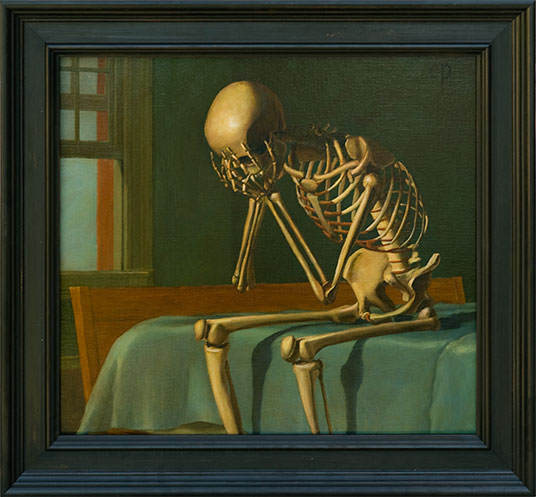
This book was interesting because there is a multitude of emotional issues going on and this photo I have found, illustrates just that problem. This photo, illustrates my belief that not only do we all have skeletons in our closet but Sam and her family are keeping those skeleton's (his alcoholism) in the closet by not acknowledging her father's problems. Her father at some level must feel shame for what he is doing and Sam feels embarrassment and shame for how her family really lives, so she hides her own skeleton. This picture illustrates the emotional toll that problems like these take on not only an individual who may have a problem, such as alcoholism, but the family as well.

This picture is actually a painting by Chris Peters and his work illustrates many hard yet beautiful issues and concepts in our world today. Check out his website where I found the photo.... Website

EDU 330- Book 7

The seventh book I choose to read was by an author who I have already read and loved. I choose to read “Lush” by Natasha Friend. This book, written similarly to “Perfect” is geared towards a younger crowd with not only language and writing style but issues pertaining to middle school through high school age groups. This “issue” book brings to light alcoholism, a problem affecting a younger and younger crowd by the day, forcing more and more middle and high school students to stare the pressure of drinking in the face. This book is centered around Sam, a seemingly happy middle school girl, who hides a dark secret from her social world. She places herself among four main “BFFs” that she spends the majority of her time with, and who also have no idea that alcoholism affects her world on a daily basis. Sam is hiding the fact that her father is an alcoholic. Her mother, who immerses herself in working out, chooses to ignore the cruel reality that her husband has a drinking problem.

When Sam realizes that she can’t turn to her friends or family, she begins to write letters, asking for advice, leaving them in a book in the library. When someone responds to her letters and a “relationship” forms, writing back and forth, Sam finally feels support. It is with this anonymous support that she begins to feel better. In the midst of things finally beginning to get better, she discovers that she has caught the attention of one of the popular boys, making her own social status soar. Her family is finally beginning to accept the alcoholism and her father resolves to make changes. At one crucial point in the book Sam discovers something about herself in relation to alcohol, boys, and her actions in life. This, for the character of Sam and for the reader, brings to light the choices one must make and the joys or pains those decisions bring. Further on in the novel, Sam finds her father abusing her brother one night, after a drinking binge, he is sent to rehab. In addition, Sam has lied to her friends about the situation at home, and in the midst of her father trying to straighten out his life, she is abandoned by her friends.

This book gives an interesting, middle school perspective on an issue that affects not only students but their families and friends. The challenges that Sam faces are a hard reality that many students are alone in the issues and hardships they face. However, this book illustrates the fact that avoiding the problems at hand will not make them better or even get rid of them. Rather, avoidance can and will make things worse in the long run. But the book does give, although not giving much of a “happy ending”, hope for students and children alike who face similar problems. This book, illuminating the characteristics of alcoholism, signs and symptoms as well as a view into the life of living with an alcoholic, bears much importance in understanding not only the book but the issue as well. I like this book, for the same reasons that I enjoyed her other book, readability and accessibility. Similar to the other novel by Natasha Friend, there are literary strategies that could be taught here and with written for a younger audience, the themes can be easily discussed.

However the issue in this book, I think could pose potential problems with understanding, based upon personal experiences of the students. I do believe that this book tackles a problem that could be more prevalent in homes and as such, there is an added need for caution with attempting to use this book in the classroom. This book does give students who may have or may not have experienced issues with alcohol the chance to explore it, using multiple vehicles to allow students’ expression this could be a valuable personal story experience. However once again we find the main character to be a girl and the male audience may pose objection to a “girly book”. The male students may even have a more difficult time diving into the book itself although the themes or topic may be accessed by, I hope, most if not all. But similar to the end of the other book, I was hoping for a different ending. When there isn’t complete closure in the end of the book I have a hard time feeling completely satisfied.

EDU 330- Book 6 Picture


For this book, I decided that the most important theme or message that the combined journals were trying to scream out was the overwhelming power other "things" and people can have over you. Teenage problems in this book, most of all drugs, grab a hold of you and shake you until you have nothing let unless you fight them away and persevere.

Ironically enough, the website that this picture was taken from- is also a website about teenage addiction and drug use. It is worth looking at for the purpose of this book. http://healthassistant.blogspot.com/2008/08/12-reasons-of-teenage-drug-abuse.html

Book 5- Website

This Website: If I Stay

Has book trailers and other videos that would be neat to look at in terms of using for a lesson or having students make their own.

Monday, November 29, 2010

EDU 330 Book 6

The sixth book I have chosen to read is “Go Ask Alice” by Anonymous. This book, without a named author, is written as a journal or diary, or combination thereof, about the life, thoughts, and emotions of a teenage (15 year old) girl. The girl, our main character, has a name unknown, although the name “Alice” refers to another character in the novel, Alice is also sometimes used to refer to the main character mostly for convenience. However the names, dates, and places have been changed in order to protect the anonymity of related people. These diary entries are the difficult and often painful struggles of someone using and abusing drugs. Our main character is caught in a world engulfed in teenage emotions, issues, sexual situations and conflicts as well as the diary’s main focus drugs. We learn about her, the main character, as well as her aspirations for her life. As she explores the ins and outs of the teenage world, her exploration into drugs becomes more than experimentation and transforms into addiction. We see her begin the diary or novel, as some refer to it (and I believe it is as well), with typical or average teenage problems and thoughts such as her body image, the kids at school or her popularity, as well as the ever problematic boys. She faces changes in her life with a move to a new town, bringing more problems to her social and personal life. In trying to get away from this unhappy new life, she returns to her old town for the summer. This move is what sparks a chain of events that will lead to the use and ultimate abuse of drugs. She attends a party where she accidentally drinks coke (as in Cola) with LSD in it. She finds this one experience so amazing that she extends her experimentation to other drugs such as weed/pot among others and ventures into sexual experimentations.

As our main character continues and increases drug use, the writing styles change and the language moves into a more detailed perspective. The drug use is only enhanced and the effects as well as need, confirmed when she finds acceptance with a drug abusing crowd. Through dating a drug dealer and running away she experiences more tragedy and heartache in her life, with the core of the problem still being drugs and their control over her. She returns home only to find an ongoing challenge with society and staying away from drugs. Through more experiences with drugs, of her own doing and without her knowledge of, she finds herself in the lowest point of her life. Hitting rock bottom, she resolves to get her life on track. Without telling the more cruel pieces of the novel as well as the ending, this compilation of journal/diary entries is a roller coaster of experiences with not only drugs but life. Her choices lead her to where she was in life as well as what she experienced. This novel illustrates the choices we must make in life as well as the choices we choose to make. In addition, the novel shows how our choices will affect us momentarily and perpetually.

This book is a great illustration of writing style, voice, and even various literary techniques. Using the book specifically for these purposes could prove helpful. But with all of these positive things the book has to offer, it is still a very dark and some even venture to say “realistic” view of the teenage drug world. Although I believe this book could have many positive effects with students, I would not teach this particular text in the classroom because of the level of controversy. It might work well if I was to pull pieces, but that would inherently take away from the power of the overall text. Engorged with sex, drugs, drug abuse, language, and painful scenarios, this book has the potential to be very disturbing and scary to some. I do believe that girls will relate to the book more so than boys because of the situations both sexual and non sexual that the character continues to find herself immersed in. I would recommend this book for, not necessarily an older student but rather, a mature student capable of handling the material, seeing the positive and negative the novel has to offer.

I really liked this book because I feel it gives a voice to the difficult issues teenagers face but all too often cannot express. The expression in this book is what I believe makes it so powerful. The language itself whether seeming childish or not, is important to the feeling evoked by the book. I think this book opens the eyes of the reader to problems that are seen everyday yet never seen at all. I wonder if I wonder how many of my future students will face these problems, if not all of them, and how I can help alleviate or educate on these issues. I want to read more books that have these particular issues in them not only to gather a better literary knowledge of these issues but to be able to give my students answers to some questions they may have that I cannot always answer. I hope to help even when I don’t know how to help.

Another important aspect of this book to note is the "author". The listed editor of the book is rumored to be the author, Beatrice Sparks. In many interviews she identified herself as the books editor, however when researching her background, conflicting pieces arise. Sparks had an extensive background in working with troubled children and due to these experiences, she was thought to have, used these to compile into one character in one novel. She supposedly used a real diary from one of her patients, and then destroyed pieces of it after publication while the other pieces are locked up with the publisher. All of these things seem quite odd together, along with Sparks being the sole copyright holder, according to the U.S Copyright Office, which is usually the author who holds that right.

EDU 330- Book 5

The fifth book I choose to read was entitled “If I Stay” by Gayle Forman. This interesting and thought-provoking book makes you question not only the life of the characters in the book but your own life as well. This book is centered on Mia, who is a cello player with the hopes of going to Julliard. However, the hopes and dreams for her future are shattered when she is in a horrible car accident. In this accident her entire family is killed however after much medical attention Mia has “survived” but is in a coma fighting or better yet pondering between life and death. The story now takes a really interesting turn with Mia being able to have this “experience” where she can “see” the world around her, walking through the hospital. This story is the “road” down which Mia and her family embark from the morning of the accident to the actual tragedy as well as the aftermath. It is a combination of Mia’s thoughts, memories, and flashbacks where we can really see the life she led as well as her family’s life. We learn of her parents, often at times weird, her brother, her friends, and her boyfriend Adam. It is through this middle ground of life and death that Mia confronts the realization of where she is and the hard decision of whether to stay and hold on to life where her family is gone where she would have horrible injuries or she could let go of her life and die, joining her family in another world. Wondering what to do and where to go the reader follows Mia in her journey through life and death.

Although this seemingly interesting book projects many memories that bring uplifting thoughts, there are moments in which the author becomes very morbid and real. Gayle Forman does a great job at making the reader feel the sadness of the characters and the uncomfortable feelings of dealing with those situations and emotions which we so often want to push aside or ignore. This book deals with making choices between our past and our future. Realizing what we have that matters and what we have that does not. Mia’s perceptions of her life and relationships are forever changed after she finds herself in the current situation. How she and how we, the reader, live our lives can be reassessed through the reading of this novel. We see Mia second guessing herself, her life and her relationships. But the emotional journey Mia takes is important not only for the novel but for the reader as well.

This would be a great book to use in illustrating not only narrative styles but techniques such as timelines, flashbacks, point of view, and voice as well as tone. The way this book is written, bordering two lives, the here and now and the “after”, allows the reader to transcend ordinary thinking of life. This book would be great to illustrate how the speaker of the text can control the flow and feeling of a text. (character or author) I think that it would be great as a literary tool. However, there are many pieces in the novel that are written with such a reality as to make them gruesome and I wonder if some may be affected by the material. Also with sexual references and scenes this book may be deemed inappropriate by some. There is also some swearing involved in this novel, and although I would be willing to look past the language for the greater literary purpose, other teachers and parents may not. Being able to use this text to generate questions not only about issues within the novel but with life decisions would be very educational academically and personally. Discussing Mia’s choice, what would students do in her place? What were the most important pieces of her life she remembers, or students remember and why? This could generate into quite a lesson with much “journaling” and discussion.

One favorite quote from me and many others was:
“Am I dead? I actually have to ask myself this. Am I dead? At first it seemed obvious that I am. That the standing-here-watching part was temporary, an intermission before the bright light and the life-flashing-before-me business that would transport me to wherever I’m going next.” (pg. 19)

EDU 330- Book 5 Picture

This book allows me to really think about life, not only on a larger scale in terms of life and death, but how I live day to day. It makes me realize how I hold on to each and every day of my life is important to who I am and who I will become, here on earth and where I go after life.
I found this picture-


Source: http://amazingdata.com/a-collection-of-composition-photos-holding-on-to-the-sunlight/

Tuesday, November 16, 2010

Response to "Flush" Read Aloud

Normally, I am not a fan of a read aloud since most of the time I can’t follow the story. This isn’t because I can’t keep up but rather the read aloud is going too slow. When I read independently I find myself reading very fast and when I get excited about the book I read even faster. Therefore, I can set my own pace with independent reading. However, when I have to sit and listen to someone, as I hated to do as a child- because I wanted to do it myself, it is really hard for me to concentrate. I find myself thinking of other things, I wanted to be independent as a child, read as much or as little as I wanted and when I wanted and the thought of someone reading for me and forcing me to listen, just didn’t sit well. But I think this time something might have changed with the reading of “Flush”. I found myself at first, a little distracted and then I slowly began to listen to parts of the story. I believe because this was done, a read aloud, over an extended period of time and not just a short story or poem, I was forced to follow along and interact when my classmates would chat about the book. I found myself slowly engaging in the story line and wondering what was happening to the characters.

Although I am still not a huge fan of a read aloud, on the part of being a student (because I do value them as a teacher), I think that they hold potential for a lot of kids, even those who have feelings such as mine. I do believe that this read aloud, because I didn’t follow the entire story, has made me want to read the story on my own. Aside from having a hard time being read to, I think this is valuable time, the read aloud in the classroom, not simply as an extra, but as a substantial part of the class or curriculum. A read aloud can be used for many different purposes in the class not only as a chance for students to step back and have “quiet time” but for them to let go, to have a “risk free” reading experience. Allowing students to feel free to doodle, to play with play dough, or other kinesthetic activities (while sitting somewhere in the room not disturbing others) is important because a lot of students want or maybe need constant activity, on some level. I know, not specifically from this read aloud, but from learning about them, that I want to use read aloud, as an important part in my classroom.

Tuesday, November 2, 2010

EDU 330- Book 4 Picture


This book not only holds many themes such as racism, adoption, fitting in, disabilities in many forms, and trying to figure out who you are. In trying to capture this book in the form of a picture couldn't be done with only one, so I have created a collage....


These are the resources used for the collage-
http://shopallamericansports.com/Ladies-Letter-Jackets_c132.htm
http://www.dreamstime.com/anti-racism-image3236505
http://www.europafrique.org/international-adoption-law.html
http://vistica.wordpress.com/2009/12/01/swimming-drills-vs-conditioning/
http://annette201.wordpress.com/
http://www.clipartof.com/details/clipart/24744.html
http://theyayayas.wordpress.com/2010/07/26/whale-talk-by-chris-crutcher/

EDU 330- Book 4

A story with foul language, discrimination, racism, sexual comments and even teenage drama wrapped in a ball covered with relationships, determination, love, and a heart-warming struggle to do what is right, encompasses Chris Crutcher’s book entitled “Whale Talk”. The Tao Jones or T.J. is our main character, a teenage boy, who never really fit into his athletically driven high school. As a young boy, T.J. was adopted by his lawyer mother and motorcycle loving father after being abandoned by his biological mother. When one of the teachers from his school, Cutter High School in Cutter, Washington, asks him to join the swim teacher, two problems arise. First there is no pool and second, T.J. is the only one on the team.
Through determination and maybe even pride, T.J is driven to prove that “his” swim team is just as good as the rest of the athletic teams at their school and deserve to wear the prized varsity letter jackets given only to “true athletes”. T.J.’s swim team, a band of misfits, join forces to help each other battle discrimination, bulling, the school (mostly the judgmental athletic department), and even each other as they strive for the letter jackets, learn who they are and where they were meant to be in life. This book offers the readers a look not only into the journey of the “swim team” but T.J.’s life struggle with who he is and where he has come from.
A fast read with accessible, even though at times inappropriate, language that grasps the reader and pulls you into the book. Relatable characters and issues give the book a life of its own. An amazing book written with a reality unseen before and packed full of real life issues that touch the heart of the reader, “Whale Talk” is a must read.

This was one of the only books that has ever made me cry. It was an emotionally engaging book, one that had me hooked not just on the subject matter, the issues and language involved but the characters themselves as well. Chris Crutcher is an amazing author, with many incredible books that young adults and even older audiences will enjoy. He has a number of books that are banned in certain schools and states which make his books all the more interesting to read. Interestingly enough, “Whale Talk” was one of these books up for a vote to remove or keep the book from being taught in the classroom of a school in Delaware of 2009. Fortunately for Chris and for the students in this Delaware school, the vote was 0 to 9 to keep the book. This book can be used to teach many areas in the classroom including diversity, cultural education, discrimination, language, storytelling, literary elements such as voice, plot, themes, conflict, and dialogue. Symbolism, subtext and or context can also be taught using this book. If I could get my school and the parents on board for using this controversial piece of text then I believe that this would be an incredibly beneficial book to my students not only academically but socially and emotionally as well.

This is the link to the information on the issue of removing or keeping the book- “Whale Talk”

And this is Chris Crutcher’s Website

Tuesday, October 12, 2010

John Green Reviews

The following websites are all reviews on one or more of John Green's books.
His books include:
"Paper Towns"
"Looking for Alaska"
"Will Grayson Will Grayson"
"An Abundance of Katherines"


This website talks about the author and his books

Review 1

Review 2

Wednesday, October 6, 2010

Book Talk 1

“Perfect” – Natasha Friend

This book written with very accessible language and literary strategies, allows many readers to dive right into the story. Although written, with a primary audience of ages 10-15, I personally think, the topics and issues brought up could certainly pertain to all ages through high school. The typical high school drama and problems echo through the voice of Isabelle, our main character, and allow us into her world of being 13 years old. She is in the 8th grade and has only her mother and sister to count on. She lacks social confidence and thus has found herself without a large social surrounding. When Isabelle’s mother learns of her eating disorder, the “deal” is for her to attend group therapy sessions. With these sessions flows the realization of her problems, the discovery of a lifetime- that the most popular girl in school also has an eating disorder, and her family’s path to acceptance and dealing with her father’s death.

• Easy to read
• Accessible language (vocabulary is that of a seventh grader)
• Short chapters and overall book length
• Issue book- dealing with problems that are controversial= eating disorders, death, and peer pressure
• Relatable characters and plot
• The end leaves you dangling (wanting more)
• Mostly female characters

- This book is one I would certainly recommend. I liked this book a lot because it kept me interested throughout and with an easy vocabulary, plot, and theme, it was something most people (in my opinion- more so females) could get into. There is a lot to the story because of the multiple angles of Isabelle’s life. With not only her eating disorder being the main problem of the book, her mother and sister each have their own problems they must work out through the course of the book. As the reader, you find yourself pushing harder and harder for Isabelle and her family to connect to each other and help each other.

- But this book leads to much self discovery and entices the reader to feel the hardship, sadness, and joy of all the characters. However, the ending of the book left me somewhat frustrated. The ending left so much unanswered, and as much as that may be a part of the story, for those who want closure, this book gives none. I would recommend this book to others with the precautionary advice of, it being a “girl issue” book and may leave you wondering where the rest of the story went. I believe this is a story about finding out who you are, grabbing a hold of it, and never letting go.

- PowerPoint Presentation- To the right is my resources box, click the link for Book Talk 1, under Lizzie on that page click the file

Tuesday, October 5, 2010

EDU 330- Book 3- Re-thinking

One critical point that while "re-thinking" the book I may have overlooked is the potential of an "issue" book. Although using a book like this would prove to be useful in introducing many issues and talking/dealing with them, there is also the alternate. This book may be uncomfortable for some students to read and or deal with. I would suggest knowing the class and having a good classroom environment, one in which all students feel safe and secure enough to voice their opinion and feelings on the book, the issues, and their life too. I optimistically believe that students want to open up and I hope that this book could be taught without problems. But the classroom is always full of surprises.

Monday, October 4, 2010

EDU 330- Book 3 Picture


The idea for this book, for me, was self discovery. It was the idea that sometimes we forget the person that we are because we are too focus on the person we want to become. I think this book allows the reader to see the struggle of the character to really find herself.

EDU 330- Book 3

“Perfect” by Natasha Friend is a great book that I could see myself using as an “issue” book or as a starting point to tackle many difficult problems. This book, with the main character being Isabelle Eliza Lee, tackles many of individual and family’s secrets throughout the book. We begin with Isabelle discussing her sister, which she so humorously names “Ape Face”, or April, and how April has tattled on her for something she has “done”. This book brings to light the strong and difficult topic of eating disorders, pear pressure, fitting in and stereotypes. We follow Isabelle through the book and find that she is not the only one carrying a large burden and “issue” on her shoulders. Isabelle’s sister and mother carry much emotional pain and issues that they have yet to deal with. We learn of the death of Isabelle’s father, who has been gone for some time and the affect that his absence has on their home, their family, and their own personal selves. This book brings strong emotions into play of how to deal with one’s own family whiling trying to take care of one’s own self.

This book, written very accessibly with language and literary strategies, allows many readers to dive right into the story. Although written, with a primary audience of ages 10-15, I personally think, the topics and issues brought up could certainly pertain to all ages through high school. The typical high school drama and problems echo through the voice of Isabelle and allow us into her world of being 13 years old. She is in the 8th grade and has only her mother and sister to count on for "continual support" if you can even call it that good of a name. She has two friends, Nola and Georgie, whom she eats lunch with and hangs out with, until she find herself in the company of someone higher up on the popularity ladder. She lacks social confidence and thus has found herself without a large social surrounding. When Isabelle’s mother learns of her eating disorder, the “deal” is for her to attend group therapy sessions. With these sessions flows the realization of her problems, the discovery of a lifetime- that the most popular girl in school also has an eating disorder, and her family’s path to acceptance and dealing with her father’s death.

In a world where so many children are dealing with single parent homes, loss of one parent or both, eating disorders, social issues, and much more. This book gives an insight to the “real” world of how some manage to stay, barely, afloat with life passing them by. Things are not always what they seem, as this book proves over and over again with the characters. Written with mainly girl characters, the male audience may have a harder time getting into the book, but if there was a way to use this text as a “vehicle” text it may prove more than useful in helping students to understand that those sitting next to you in class are battling something of which you know absolutely nothing about, and on a daily basis. I liked this book a lot because it kept me interested throughout and with easier language, plot, and theme, it was something most people (in my opinion- more so females) could get into. However, the ending of the book left a lot to be desired. I was frustrated at how the ending left so much unanswered, and as much as that may be a part of the story, for those who want closure, this book gives none. I would recommend this book to others with the precautionary advice of, it being a “girl issue” book and may leave you wondering where the other half of the book went.

Reaction to "I am the Messenger"

After reading this book and writing my blog post about it, we had the chance to discuss it in class. I thought it would be nice to share some revelations I had about the book and how I felt after hearing other peoples' thoughts.

First of all the language in the book was hard for me to figure out and I concluded that it was a British accent, but as my fellow classmates have made me aware it is not, it is an Australian accent instead. I think this affects the my interpretation of the story, how I view the characters, it all has to do with context and this one little detail helped to change some ideas throughout the book for me. The next interesting point that my classmates brought up were the 12 scenarios that Ed was placed into, from the cards. There is symbolism in each card, or so I believe, and what does this to do each of the names, people, addresses, movies on the cards? We can break the book down into four categories: Diamonds, Clubs, Spades, and Hearts. And in each we can thus go further with the subjects of the cards- Diamonds: were addresses- Mila, Sophie, and the rapist; Clubs: names carved on a rock- priest, Angie, and the Rose brothers; Spades: were author names- Tatupu, Bev Kennedy, and the movie theater guy; Hearts: movie titles- Ritchie, Marv, Audrey.

If you are a superstitious person then it could be taken as a sign that Ed was himself the final message when he receives his final card making him the 13th message. There seemed to have been a connection from each card to the next, whether it be the way in which Ed has to deliver the message, how he had to understand the message or even how to decode the message. With the idea of connection on the mind, many of my classmates made the observation, or as I would call it a revelation, that the author was the final guy in which Ed meets, he was the one who orchestrated the events and who was "telling" Ed what to do. Some may believe that the author was the final messenger for Ed and his journey continues on.
I hadn't thought about all of these things before. I wonder what my future students would this of this book?

Wednesday, September 29, 2010

Author Websites

This is a couple websites of some amazing authors:

Chris Crutcher- http://www.chriscrutcher.com/index.html

Laurie Halse Anderson- http://madwomanintheforest.com/

Gayle Forman- http://www.gayleforman.com/

Jenny Han- http://www.dearjennyhan.com/

Maggie Stiefvater- http://www.maggiestiefvater.com/index.php

Saturday, September 18, 2010

Class Book 1

"I Am The Messenger" by Markus Zusak- WOW, WOW, and WOW!

This book was amazing! This story, starting out simply enough about a boy named Ed Kennedy, nineteen years old, and he drives a taxi cab. He lives simply enough, in the city, in a small apartment, "shack", with his dog named "Doorman". The book begins with Ed and his friends, Marv and Ritchie(though later we meet Audrey too), at a bank while a robbery is taking place- by some stroke of fate no one is hurt and Ed plays a small part in stopping the bugler. After this amazing day Ed receives a playing card in the mail, it’s the Ace of diamonds. This card is a message, something that Ed must do. Throughout the book, Ed receives messages, via playing cards- the aces, and with each one he must figure out what is written on the card, what it means, where or who it is about, and what he must do.

This whole story surrounds Ed and his life, his ordinary life. It is the life of someone who does the same things day in and day out. He goes to work, deals with his swearing mother, his brother and sisters who barely speak to him because they have moved away, missing his father, seeing his friends, playing cards at friends' houses, and drinking coffee with his dog. He doesn't do anything out of the ordinary, never stops to think about something bigger and better, and worst of all he continually puts himself and his life down. But through this book we can see a transformation. Ed must push himself to do something more, something greater than he has ever done before. I don't want to give too much away because, everyone should read it! I would recommend this book to anyone!

The other interesting idea that I had throughout this book was how I could use this in the classroom as well as my own funny thoughts throughout the book on how the story was going or where the plot was going to travel. SO instead of giving away the entire book I want to list some of the comments I wrote through the book in two different categories- 1.) ideas for lessons and 2.) my silly thoughts/reactions to the book

1.) -the language is different from that of American- English, the book uses such language that points to the way people from England/Australia(it is hard to figure out) would be talking (fella, shirty, dole bludger, oi, arse, wanker)
-the vocabulary used is very neat, from simple words to more complex (dictionary time) - aspersions/sactimonious
-there are cool moments when the book points to outside events and people, this points to a huge literary term: context- using this starting point could go many ways
- The book does a lot of name dropping for movies, people, authors, etc.
- Setting, place and time are very important to this story
- This book also tackles “real issues” of life- how to handle, help, become aware and informed- that makes me think about the messages Ed is trying to deliver
-Metaphors and other ways to convey emotions
-Descriptive and chapters- only deal with one topic at a time- good idea for a book- works well with this one- why?
-Word choices- powerful meaning and messages conveyed through words- more than their literal meaning
-American English vs. other languages- how it affects the book
-Remembering- a theme of the book?
-What other books or movies does this relate to? - “The Box” and “Pay it Forward”
-Are there other people doing what Ed is doing?
- Does the book come full circle?

2.) - The descriptions are incredible in the story, you get the feeling that the setting (place and time) are important
- The language speaks to the reader because it is different and fun
- Why was it that particular card that was picked first (why aces), someone knows he plays cards- someone knows his life
-The cards give him an excuse to be someone else, something else than his ordinary life- to be important and do something important
- Every person that he meets deserves something better than what they have and doesn’t he?
- Do the cards relate to the people in his life?
- This book also tackles “real issues” of life- how to handle, help, and become aware and informed- that makes me think about the messages Ed is trying to deliver
- When he deals with some of the people he is supposed to deliver a message to, he is making the others have a moment, a message is conveyed right then and there- and to both not just one person involved
-The point of these messages that he is delivering is that he is helping others without getting anything from it, but then again- he is getting some joy in knowing he is actually helping
- Sisters, mother, brother- Ed is being connected to these people through the people already in his life- barefoot girl= his soccer game, Edgar street=his father, Milla= the love he can’t have
- Hard things in life sometimes must either be left alone or done alone
- Is Ed- by doing all these things from the cards- re-experiencing this in his life, but from another point of view?
-The messages are changing his point of view, he appreciates life and isn’t so down on himself all the time
-The priest, Angie, Rose brothers- are they all connected or how do all these people fit together and do the messages connect?
-Ed is getting back what he gave
-Ed starts helping without needing too-he originally helped at the robbery- had it in him all along

I also loved particular quotes throughout the book:
-“The moon escapes from the clouds, and I suddenly feel naked. Like the world can see me.”
-“It was like she held a string and pulled on it just slightly to open me up. She got in, put a piece of herself inside me, and left again. In there somewhere I still feel it.”
- “Inside, I laugh. Me? A saint? I list what I am. Taxi driver. Local deadbeat. Cornerstone of mediocrity. Sexual midget. Pathetic card player.”
- “I wouldn’t want four aces. In a card game, you pray for a hand like that. My life is not a card game.”- this is so ironic
- “I want to tell them, but I realize that all I do is deliver the message. I don’t decipher it or make sense of it for them. They need to do that themselves.”- interesting point to discuss in a class

Tuesday, September 14, 2010

EDU 330- Book 2 Picture


These images are my feelings from "Send me Down a Miracle" by Han Nolan-and this compilation I want to call: Identity in Pieces

Pictures found from the website: World of Mysteries-from The M.C. Escher-inspired Art of Rob Gonsalves https://blogger.googleusercontent.com/img/b/R29vZ2xl/AVvXsEgORKMJU2shjk_JwxB8IusGAGGApJ20hF4rGAf6tGuPqQPzWNfGrEk7RqkkULT2xlyNaJDytwhI1cFApqmTQo5kNmugsRL9Lwu67Ps4UR38iF537xhmHlYtFW608VfGjHSmPYiFoddZ-fBL/s640/Gonsalves_UnfinishedPuzzle.jpg

EDU 330- Book 2

My next book that I read was entitled “Send me down a miracle” by Han Nolan. This book really hit home with some of the issues explored in the book. It begins with the main character Charity Pittman, a fourteen year old girl, describing her life and her family. She lives in a small town of Casper, Alabama with her sister Grace and her father who happens to be the town Reverend. Early in the book we discover that someone new has come to town and her name is Adrienne. She is from the city and happens to be an artist, somewhat messy and free-spirited, and her new ideas and ways of living put the town in a crazy uproar. The town, a quiet small southern town, has “proper” ways of behaving and Adrienne does not fit their expectations or their mold.

As we learn that Charity is trying to discover herself, being the right age of figuring out school, friends, boys and such, she wonders about being an artist. Adrienne has so kindly offered art lessons but Charity’s father doesn't see it to be of importance to take art lessons. Going to school, working, and more importantly attending services on Sundays which entails staying very true and strong to your faith is what Charity’s father has in mind for her, as well as following in his footsteps. However this left no time for Adrienne. Her father, trying to keep the town together through faith, helping others, has somewhat lost himself in preaching. His wife, Charity and Grace’s mother has left for a birdcage convention that she attends every year, although this year, it seems to be different to Charity and the others around town.

Taking art lessons anyway we find that Charity is starting to find that she is moving away from following her father’s footsteps and wanting to have her own path in life, to become her own person. But these thoughts and feelings become back burner material when Adrienne, after locking herself in her house for a month for an artistic experiment, claims that she has seem Jesus. Of course the entire town, Reverend Pittman and especially Charity, flock to her house to find out the reality of this claim. Throughout the book we see the battle between both sides of believing, that Jesus has appeared and the Adrienne is just crazy. This stirs up a lot of faith issues and problems not just for each person but for who they are in the world and for the town as a whole. The book follows Charity’s struggles to find herself and make her father happy. Charity’s family deals with its own problems and so do the other families in town, questioning their lives and faith for the first time.

This book is a great read! I loved it! Not only do we see the main character struggle but we see everyone in the book struggle with one issue or another. It brings the idea of moral issues, religion, and identity into play. Not only would this book be great as a discussion tool for the issues at hand, but for faith of any kind in something in a person’s life. It would work great as a tool to discuss how we find our own path in life and what happens when adults, parents, others in our lives try to tell us how to live. I ended this book feeling closure, feeling lost and feeling found. The book really makes you wonder. Furthermore, to top the whole story off, the ending of the book makes you stop and question whether or not the story was as told or if it was a metaphor for something larger. As in, was Adrienne just someone sent to help the town discover themselves or was she someone who actually came and visited to have a vacation away and to practice her “art”. I would definitely read this book again and recommend it to others out there!

Independent Reading List (Reasons)

Reasons for Choosing:
I only wrote reasons for the first ten, but I may read other books than what is on this list.

“Monster”- Walter Dean Myers: I decided to read this book because it has literally been starring me in the face for the past several years. I bought this book when it had just come out and I wanted so bad to read it but I was always too busy. This semester I knew that I could finally read the books I had been dying to read for so long, like this one.

“Send me Down a Miracle”- Han Nolan: I choose this book because the back of the book really seemed interesting. I found the characters to have a relatable struggle, with religion, socially acceptable behavior and customs, as well as the idea of trying to “fit in” and staying true to your own beliefs and dreams. I knew that the issues in the book would be heated for debate and I love reading a book that can get me fired up.

“Perfect”- Natasha Friend AND “Lush”: I choose to read “Perfect” before I had even discovered “Lush”. I thought this would make a good, younger book about a “real issue” for young teens, especially young girls these days. I wanted to read something with a teenage reality to it. Once I read the book I decided to read another one of her books as my “two books from the same author” requirement. I think it looks quite similar, in relation to having an “issue” as the main theme of the story, so I thought it might make for another good read.

“Crooked”- Laura and Tom McNeal: This book stood out to be because of the cover. I don’t know what to make of the synopsis on the back, but it seems weird and interesting enough. This book was also one that has been sitting on my shelf for some time and I would like to put it to a better use than simply collecting dust.

“Go Ask Alice”- Anonymous: I choose to read “Go Ask Alice” because I have heard many people talk about how good the book was and how much it had to offer. I have had it for so long that I can’t remember if I have actually read it before or not. I do however know that a book like this can offer a lot more than a potential “issue” book, it can give a lot more for potential use in the classroom, so it looks for now.

“Whale Talk”- Chris Crutcher: I decided on this book because I really like this author. I have read “Staying fat for Sarah Byrnes” and fell in love with it. When I saw the other books that were from this author I thought that it would be a good idea to give more of the work a try and see what happens. I hope not to be disappointed, seeing as how I loved the other book so much.

“Thirteen Reasons Why”- Jay Asher: This book was talked about so incredibly much last semester than I knew I had to see what the buzz was all about. I have heard many good things about this book and since about half of the people I know who read on a daily basis said this book was awesome. I knew I had to see for myself if it was true and it was just too enticing not to try.

“If I stay”- Forman Gayle- This book not only sounded really interesting but I don’t think I have ever read a book with a story such as this before. I choose this book for the differences that I thought it could bring to my on-going book list. I know that others have had a great experience with this book and I wanted to try to have a great experience too.

“Hoot”- Carl Hiaasen- This book came up on the first day of class when we discuss books we have all read. I could remember hearing about it and some of the story but I have never read the book. After we started our “read aloud” everyday with a book entitled “Flush” by the same author, I discovered this author had a fun way of writing. This fun writing seemed like a good reason to try another book of his and so this book met my hands.

Tuesday, September 7, 2010

Independent Reading List

Lizzie’s Independent Reading List:
“Monster”- Walter Dean Myers
“Send me Down a Miracle”- Han Nolan
“Perfect”- Natasha Friend AND “Lush” – Natasha Friend
“Crooked”- Laura and Tom McNeal
“Go Ask Alice”- Anonymous
“Whale Talk”- Chris Crutcher
“Thirteen Reasons Why”- Jay Asher
“If I stay”- Forman Gayle
“Hoot”- Carl Hiaasen

-Multiple books are Award Winners
-I am reading two books by Natasha Friend
-The book that is a stretch for me is “Crooked”- it is a book I have had for so long and want to read but no longer looks like a book that I would, at this point in time, pick out (it seems like a stretch because of interest and topic choice) – However “Thirteen Reasons Why” seems to be a hard book to get through because of the topic, not something I generally like to read about

Other Options:
“The Summer I turned Pretty”- Jenny Han
“Coraline”- Neil Gaiman (“Stardust”)
“Uglies”- Scott Westerfield
“A series of unfortunate events”- Lemony Snicket
“The Princess Plot”- Kirsten Boie
“The Chocolate War”- Robert Cormier
“Stoner and Spaz”
“The Book Thief”
“Flawless”- Sara Shepard
“The Curious Incident of the dog in the night-time”- Mark Haddon
“Bunker 10”- J.A. Henderson
C.S. Lewis books


Narrative:
The most important aspect of independent reading is enjoyment. So often, and in my opinion, too often, students and adults are forced to read things that are too long, too dull, too tedious, or simply horrible. Sometimes by chance, when people, myself included, have to read certain materials it happens that we may “end up” enjoying them. However, majority of the time, reading for a particular purpose other than just random reading, is not looked at with much enthusiasm (unless you’re an English Teacher). I want to put the fun back into reading and for me, this independent reading is doing just that very thing. I hope to be able to read books that have sat on my shelf for 4 years or more. I want to be able to explore what I “think” I like and what I never thought I would. I am hopeful that I will build a great and expansive reading list not only for me but for my future students of the books that not only I will read but books that my classmates will read. I would love to continue book talks in class to be able to find new books to read either later on for my personal reading or for more independent reading for class. I think that creating a class book list is a great idea, on a wiki or blogging to each other about our books. I love being able to share with others and hear what amazing books and thoughts they have to offer.

EDU 330- Book 1 Picture


After reflecting on reading, I decided that for each book I read, I am going to post a picture representation of what the book left with me. A picture form of how I felt after reading the book and reflecting on it. So for "Monster" the picture I felt best represented my feelings was:
What I call- Freedom through Truth- the power to find the truth and allow yourself to break free from those who hold you down lies in your own hands

Picture: By Joe Klein on the website: Rockford Register Star- http://blogs.e-rockford.com/applesauce/category/libertarians/

EDU 330- Book 1

My first book that I have chosen to read is entitled "Monster" by Walter Dean Myers. This National Book Award finalist, among other awards, was a gripping story from the very first page. This story is told by a young boy, only sixteen,(he is black, which I believe is an important factor contributing to discrimination in the book) and named Steve Harmon. Steve is telling this story from his own view point, which is at current behind bars at the Manhattan Detention Center. Steve is battling being on trial for murder. This book is written, as though Steve, is directing a movie with screen shots, scenes, camera angles, separations for character speech, as well as a listing of the important characters in the book- many of whom are fighting against Steve. All of this is being told through Steve's writing, which is being kept in his notebook, one of the only things he was able to keep. Although most of the book is written as a movie script, he has journal entries throughout that add to the impact of the story.

Throughout this book, we encounter Steve telling the story, piece by piece, of how he was charged with murder. A case, in my own opinion, of the "wrong place, wrong time" scenario for Steve who ended up taking the fall for another's actions. The bulk of the story takes place with Steve in his cell, although we do move with him as he goes to trial (in the courtroom) and his daily life around jail. The title of the book comes from a name that the prosecutor calls Steve, as he is in the courtroom, during the trial. The main characters of this book involve Steve's attorney Kathy O'Brien, who seems to disbelieve Steve from the beginning. Sandra Petrocelli, the prosecutor, who seems to have it out for everyone. James King, a thug involved in the crimes and "Bobo" Evans who seems to have the biggest mouth around, willing to do whatever it takes to cover his own behind. There is also Osvaldo Cruz, a gang member who tries to put on an act to save his reputation and other witnesses who were at the scene.

I think the reason I liked this book so much was the accessibility of it. The reading, or language more importantly, was easy to read. I could relate to the vulnerability of Steve and his determination to fight for what he believed was the truth, as well as his innocence. I wanted to give Steve the benefit of the doubt, believing that he was innocent along the way. At some points throughout the book, you stop and think, "Wait, maybe Steve did have something to do with this- is he guilty?" But you ultimately find yourself sticking true to the main character, almost wanting to protect him from the cruelty behind bars and of the others involved in the case. This book was a great read, fairly short, and although contains some gruesome details, you just can't put it down.

Reading Journey Has Begun

This blog created for my EDU 330- Young Adult Literature class, has inspired me to do something much greater for love of reading. Not only will this blog be a safe haven for reading "dorks" much like myself but I will be able to compile not only my love of books but include titles and authors from my family, friends, and colleagues' interests as well. I will be reflecting on books I will be reading and creating a list of books I would recommend, a list of books that would be great to use in the classroom, and those that I think are worth a second glance.
I hope you enjoy and can't wait to pick up yet another book to "Read for Real"!

Books For Real (a list of books I loved)

  • "Go Ask Alice"- Anonymous
  • "Green Glass Sea"- Ellen Klages
  • "Hoot"- Carl Hiaasen
  • "I am the Messenger"- Markus Zusak
  • "If I stay" - Gayle Forman
  • "Lush"- Natasha Friend
  • "Monster" - Walter Dean Myers
  • "Perfect"- Natasha Friend
  • "Send me down a miracle" - Han Nolan
  • "The Graveyard Book"- Neil Gaiman
  • "The Hunger Games"- Suzanne Collins
  • "Thirteen Reasons Why"- Jay Asher
  • "Whale Talk"- Chris Crutcher