Tuesday, November 30, 2010

EDU 330- Book 7 Picture


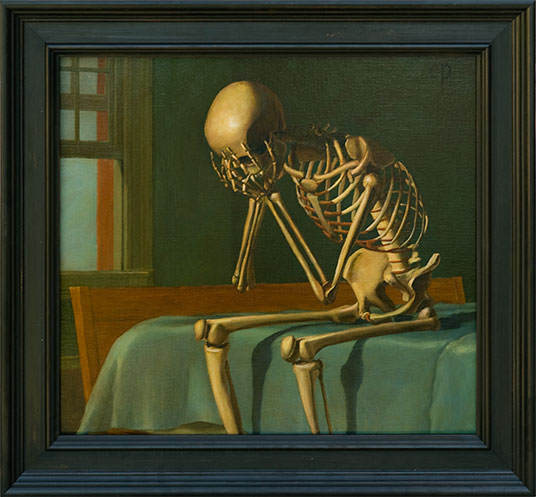
This book was interesting because there is a multitude of emotional issues going on and this photo I have found, illustrates just that problem. This photo, illustrates my belief that not only do we all have skeletons in our closet but Sam and her family are keeping those skeleton's (his alcoholism) in the closet by not acknowledging her father's problems. Her father at some level must feel shame for what he is doing and Sam feels embarrassment and shame for how her family really lives, so she hides her own skeleton. This picture illustrates the emotional toll that problems like these take on not only an individual who may have a problem, such as alcoholism, but the family as well.

This picture is actually a painting by Chris Peters and his work illustrates many hard yet beautiful issues and concepts in our world today. Check out his website where I found the photo.... Website

EDU 330- Book 7

The seventh book I choose to read was by an author who I have already read and loved. I choose to read “Lush” by Natasha Friend. This book, written similarly to “Perfect” is geared towards a younger crowd with not only language and writing style but issues pertaining to middle school through high school age groups. This “issue” book brings to light alcoholism, a problem affecting a younger and younger crowd by the day, forcing more and more middle and high school students to stare the pressure of drinking in the face. This book is centered around Sam, a seemingly happy middle school girl, who hides a dark secret from her social world. She places herself among four main “BFFs” that she spends the majority of her time with, and who also have no idea that alcoholism affects her world on a daily basis. Sam is hiding the fact that her father is an alcoholic. Her mother, who immerses herself in working out, chooses to ignore the cruel reality that her husband has a drinking problem.

When Sam realizes that she can’t turn to her friends or family, she begins to write letters, asking for advice, leaving them in a book in the library. When someone responds to her letters and a “relationship” forms, writing back and forth, Sam finally feels support. It is with this anonymous support that she begins to feel better. In the midst of things finally beginning to get better, she discovers that she has caught the attention of one of the popular boys, making her own social status soar. Her family is finally beginning to accept the alcoholism and her father resolves to make changes. At one crucial point in the book Sam discovers something about herself in relation to alcohol, boys, and her actions in life. This, for the character of Sam and for the reader, brings to light the choices one must make and the joys or pains those decisions bring. Further on in the novel, Sam finds her father abusing her brother one night, after a drinking binge, he is sent to rehab. In addition, Sam has lied to her friends about the situation at home, and in the midst of her father trying to straighten out his life, she is abandoned by her friends.

This book gives an interesting, middle school perspective on an issue that affects not only students but their families and friends. The challenges that Sam faces are a hard reality that many students are alone in the issues and hardships they face. However, this book illustrates the fact that avoiding the problems at hand will not make them better or even get rid of them. Rather, avoidance can and will make things worse in the long run. But the book does give, although not giving much of a “happy ending”, hope for students and children alike who face similar problems. This book, illuminating the characteristics of alcoholism, signs and symptoms as well as a view into the life of living with an alcoholic, bears much importance in understanding not only the book but the issue as well. I like this book, for the same reasons that I enjoyed her other book, readability and accessibility. Similar to the other novel by Natasha Friend, there are literary strategies that could be taught here and with written for a younger audience, the themes can be easily discussed.

However the issue in this book, I think could pose potential problems with understanding, based upon personal experiences of the students. I do believe that this book tackles a problem that could be more prevalent in homes and as such, there is an added need for caution with attempting to use this book in the classroom. This book does give students who may have or may not have experienced issues with alcohol the chance to explore it, using multiple vehicles to allow students’ expression this could be a valuable personal story experience. However once again we find the main character to be a girl and the male audience may pose objection to a “girly book”. The male students may even have a more difficult time diving into the book itself although the themes or topic may be accessed by, I hope, most if not all. But similar to the end of the other book, I was hoping for a different ending. When there isn’t complete closure in the end of the book I have a hard time feeling completely satisfied.

EDU 330- Book 6 Picture


For this book, I decided that the most important theme or message that the combined journals were trying to scream out was the overwhelming power other "things" and people can have over you. Teenage problems in this book, most of all drugs, grab a hold of you and shake you until you have nothing let unless you fight them away and persevere.

Ironically enough, the website that this picture was taken from- is also a website about teenage addiction and drug use. It is worth looking at for the purpose of this book. http://healthassistant.blogspot.com/2008/08/12-reasons-of-teenage-drug-abuse.html

Book 5- Website

This Website: If I Stay

Has book trailers and other videos that would be neat to look at in terms of using for a lesson or having students make their own.

Monday, November 29, 2010

EDU 330 Book 6

The sixth book I have chosen to read is “Go Ask Alice” by Anonymous. This book, without a named author, is written as a journal or diary, or combination thereof, about the life, thoughts, and emotions of a teenage (15 year old) girl. The girl, our main character, has a name unknown, although the name “Alice” refers to another character in the novel, Alice is also sometimes used to refer to the main character mostly for convenience. However the names, dates, and places have been changed in order to protect the anonymity of related people. These diary entries are the difficult and often painful struggles of someone using and abusing drugs. Our main character is caught in a world engulfed in teenage emotions, issues, sexual situations and conflicts as well as the diary’s main focus drugs. We learn about her, the main character, as well as her aspirations for her life. As she explores the ins and outs of the teenage world, her exploration into drugs becomes more than experimentation and transforms into addiction. We see her begin the diary or novel, as some refer to it (and I believe it is as well), with typical or average teenage problems and thoughts such as her body image, the kids at school or her popularity, as well as the ever problematic boys. She faces changes in her life with a move to a new town, bringing more problems to her social and personal life. In trying to get away from this unhappy new life, she returns to her old town for the summer. This move is what sparks a chain of events that will lead to the use and ultimate abuse of drugs. She attends a party where she accidentally drinks coke (as in Cola) with LSD in it. She finds this one experience so amazing that she extends her experimentation to other drugs such as weed/pot among others and ventures into sexual experimentations.

As our main character continues and increases drug use, the writing styles change and the language moves into a more detailed perspective. The drug use is only enhanced and the effects as well as need, confirmed when she finds acceptance with a drug abusing crowd. Through dating a drug dealer and running away she experiences more tragedy and heartache in her life, with the core of the problem still being drugs and their control over her. She returns home only to find an ongoing challenge with society and staying away from drugs. Through more experiences with drugs, of her own doing and without her knowledge of, she finds herself in the lowest point of her life. Hitting rock bottom, she resolves to get her life on track. Without telling the more cruel pieces of the novel as well as the ending, this compilation of journal/diary entries is a roller coaster of experiences with not only drugs but life. Her choices lead her to where she was in life as well as what she experienced. This novel illustrates the choices we must make in life as well as the choices we choose to make. In addition, the novel shows how our choices will affect us momentarily and perpetually.

This book is a great illustration of writing style, voice, and even various literary techniques. Using the book specifically for these purposes could prove helpful. But with all of these positive things the book has to offer, it is still a very dark and some even venture to say “realistic” view of the teenage drug world. Although I believe this book could have many positive effects with students, I would not teach this particular text in the classroom because of the level of controversy. It might work well if I was to pull pieces, but that would inherently take away from the power of the overall text. Engorged with sex, drugs, drug abuse, language, and painful scenarios, this book has the potential to be very disturbing and scary to some. I do believe that girls will relate to the book more so than boys because of the situations both sexual and non sexual that the character continues to find herself immersed in. I would recommend this book for, not necessarily an older student but rather, a mature student capable of handling the material, seeing the positive and negative the novel has to offer.

I really liked this book because I feel it gives a voice to the difficult issues teenagers face but all too often cannot express. The expression in this book is what I believe makes it so powerful. The language itself whether seeming childish or not, is important to the feeling evoked by the book. I think this book opens the eyes of the reader to problems that are seen everyday yet never seen at all. I wonder if I wonder how many of my future students will face these problems, if not all of them, and how I can help alleviate or educate on these issues. I want to read more books that have these particular issues in them not only to gather a better literary knowledge of these issues but to be able to give my students answers to some questions they may have that I cannot always answer. I hope to help even when I don’t know how to help.

Another important aspect of this book to note is the "author". The listed editor of the book is rumored to be the author, Beatrice Sparks. In many interviews she identified herself as the books editor, however when researching her background, conflicting pieces arise. Sparks had an extensive background in working with troubled children and due to these experiences, she was thought to have, used these to compile into one character in one novel. She supposedly used a real diary from one of her patients, and then destroyed pieces of it after publication while the other pieces are locked up with the publisher. All of these things seem quite odd together, along with Sparks being the sole copyright holder, according to the U.S Copyright Office, which is usually the author who holds that right.
EDU 330- Book 5

The fifth book I choose to read was entitled “If I Stay” by Gayle Forman. This interesting and thought-provoking book makes you question not only the life of the characters in the book but your own life as well. This book is centered on Mia, who is a cello player with the hopes of going to Julliard. However, the hopes and dreams for her future are shattered when she is in a horrible car accident. In this accident her entire family is killed however after much medical attention Mia has “survived” but is in a coma fighting or better yet pondering between life and death. The story now takes a really interesting turn with Mia being able to have this “experience” where she can “see” the world around her, walking through the hospital. This story is the “road” down which Mia and her family embark from the morning of the accident to the actual tragedy as well as the aftermath. It is a combination of Mia’s thoughts, memories, and flashbacks where we can really see the life she led as well as her family’s life. We learn of her parents, often at times weird, her brother, her friends, and her boyfriend Adam. It is through this middle ground of life and death that Mia confronts the realization of where she is and the hard decision of whether to stay and hold on to life where her family is gone where she would have horrible injuries or she could let go of her life and die, joining her family in another world. Wondering what to do and where to go the reader follows Mia in her journey through life and death.

Although this seemingly interesting book projects many memories that bring uplifting thoughts, there are moments in which the author becomes very morbid and real. Gayle Forman does a great job at making the reader feel the sadness of the characters and the uncomfortable feelings of dealing with those situations and emotions which we so often want to push aside or ignore. This book deals with making choices between our past and our future. Realizing what we have that matters and what we have that does not. Mia’s perceptions of her life and relationships are forever changed after she finds herself in the current situation. How she and how we, the reader, live our lives can be reassessed through the reading of this novel. We see Mia second guessing herself, her life and her relationships. But the emotional journey Mia takes is important not only for the novel but for the reader as well.

This would be a great book to use in illustrating not only narrative styles but techniques such as timelines, flashbacks, point of view, and voice as well as tone. The way this book is written, bordering two lives, the here and now and the “after”, allows the reader to transcend ordinary thinking of life. This book would be great to illustrate how the speaker of the text can control the flow and feeling of a text. (character or author) I think that it would be great as a literary tool. However, there are many pieces in the novel that are written with such a reality as to make them gruesome and I wonder if some may be affected by the material. Also with sexual references and scenes this book may be deemed inappropriate by some. There is also some swearing involved in this novel, and although I would be willing to look past the language for the greater literary purpose, other teachers and parents may not. Being able to use this text to generate questions not only about issues within the novel but with life decisions would be very educational academically and personally. Discussing Mia’s choice, what would students do in her place? What were the most important pieces of her life she remembers, or students remember and why? This could generate into quite a lesson with much “journaling” and discussion.

One favorite quote from me and many others was:
“Am I dead? I actually have to ask myself this. Am I dead? At first it seemed obvious that I am. That the standing-here-watching part was temporary, an intermission before the bright light and the life-flashing-before-me business that would transport me to wherever I’m going next.” (pg. 19)

EDU 330- Book 5 Picture

This book allows me to really think about life, not only on a larger scale in terms of life and death, but how I live day to day. It makes me realize how I hold on to each and every day of my life is important to who I am and who I will become, here on earth and where I go after life.
I found this picture-


Source: http://amazingdata.com/a-collection-of-composition-photos-holding-on-to-the-sunlight/

Tuesday, November 16, 2010

Response to "Flush" Read Aloud

Normally, I am not a fan of a read aloud since most of the time I can’t follow the story. This isn’t because I can’t keep up but rather the read aloud is going too slow. When I read independently I find myself reading very fast and when I get excited about the book I read even faster. Therefore, I can set my own pace with independent reading. However, when I have to sit and listen to someone, as I hated to do as a child- because I wanted to do it myself, it is really hard for me to concentrate. I find myself thinking of other things, I wanted to be independent as a child, read as much or as little as I wanted and when I wanted and the thought of someone reading for me and forcing me to listen, just didn’t sit well. But I think this time something might have changed with the reading of “Flush”. I found myself at first, a little distracted and then I slowly began to listen to parts of the story. I believe because this was done, a read aloud, over an extended period of time and not just a short story or poem, I was forced to follow along and interact when my classmates would chat about the book. I found myself slowly engaging in the story line and wondering what was happening to the characters.

Although I am still not a huge fan of a read aloud, on the part of being a student (because I do value them as a teacher), I think that they hold potential for a lot of kids, even those who have feelings such as mine. I do believe that this read aloud, because I didn’t follow the entire story, has made me want to read the story on my own. Aside from having a hard time being read to, I think this is valuable time, the read aloud in the classroom, not simply as an extra, but as a substantial part of the class or curriculum. A read aloud can be used for many different purposes in the class not only as a chance for students to step back and have “quiet time” but for them to let go, to have a “risk free” reading experience. Allowing students to feel free to doodle, to play with play dough, or other kinesthetic activities (while sitting somewhere in the room not disturbing others) is important because a lot of students want or maybe need constant activity, on some level. I know, not specifically from this read aloud, but from learning about them, that I want to use read aloud, as an important part in my classroom.

Tuesday, November 2, 2010

EDU 330- Book 4 Picture


This book not only holds many themes such as racism, adoption, fitting in, disabilities in many forms, and trying to figure out who you are. In trying to capture this book in the form of a picture couldn't be done with only one, so I have created a collage....


These are the resources used for the collage-
http://shopallamericansports.com/Ladies-Letter-Jackets_c132.htm
http://www.dreamstime.com/anti-racism-image3236505
http://www.europafrique.org/international-adoption-law.html
http://vistica.wordpress.com/2009/12/01/swimming-drills-vs-conditioning/
http://annette201.wordpress.com/
http://www.clipartof.com/details/clipart/24744.html
http://theyayayas.wordpress.com/2010/07/26/whale-talk-by-chris-crutcher/

EDU 330- Book 4

A story with foul language, discrimination, racism, sexual comments and even teenage drama wrapped in a ball covered with relationships, determination, love, and a heart-warming struggle to do what is right, encompasses Chris Crutcher’s book entitled “Whale Talk”. The Tao Jones or T.J. is our main character, a teenage boy, who never really fit into his athletically driven high school. As a young boy, T.J. was adopted by his lawyer mother and motorcycle loving father after being abandoned by his biological mother. When one of the teachers from his school, Cutter High School in Cutter, Washington, asks him to join the swim teacher, two problems arise. First there is no pool and second, T.J. is the only one on the team.
Through determination and maybe even pride, T.J is driven to prove that “his” swim team is just as good as the rest of the athletic teams at their school and deserve to wear the prized varsity letter jackets given only to “true athletes”. T.J.’s swim team, a band of misfits, join forces to help each other battle discrimination, bulling, the school (mostly the judgmental athletic department), and even each other as they strive for the letter jackets, learn who they are and where they were meant to be in life. This book offers the readers a look not only into the journey of the “swim team” but T.J.’s life struggle with who he is and where he has come from.
A fast read with accessible, even though at times inappropriate, language that grasps the reader and pulls you into the book. Relatable characters and issues give the book a life of its own. An amazing book written with a reality unseen before and packed full of real life issues that touch the heart of the reader, “Whale Talk” is a must read.

This was one of the only books that has ever made me cry. It was an emotionally engaging book, one that had me hooked not just on the subject matter, the issues and language involved but the characters themselves as well. Chris Crutcher is an amazing author, with many incredible books that young adults and even older audiences will enjoy. He has a number of books that are banned in certain schools and states which make his books all the more interesting to read. Interestingly enough, “Whale Talk” was one of these books up for a vote to remove or keep the book from being taught in the classroom of a school in Delaware of 2009. Fortunately for Chris and for the students in this Delaware school, the vote was 0 to 9 to keep the book. This book can be used to teach many areas in the classroom including diversity, cultural education, discrimination, language, storytelling, literary elements such as voice, plot, themes, conflict, and dialogue. Symbolism, subtext and or context can also be taught using this book. If I could get my school and the parents on board for using this controversial piece of text then I believe that this would be an incredibly beneficial book to my students not only academically but socially and emotionally as well.

This is the link to the information on the issue of removing or keeping the book- “Whale Talk”

And this is Chris Crutcher’s Website

Books For Real (a list of books I loved)

  • "Go Ask Alice"- Anonymous
  • "Green Glass Sea"- Ellen Klages
  • "Hoot"- Carl Hiaasen
  • "I am the Messenger"- Markus Zusak
  • "If I stay" - Gayle Forman
  • "Lush"- Natasha Friend
  • "Monster" - Walter Dean Myers
  • "Perfect"- Natasha Friend
  • "Send me down a miracle" - Han Nolan
  • "The Graveyard Book"- Neil Gaiman
  • "The Hunger Games"- Suzanne Collins
  • "Thirteen Reasons Why"- Jay Asher
  • "Whale Talk"- Chris Crutcher